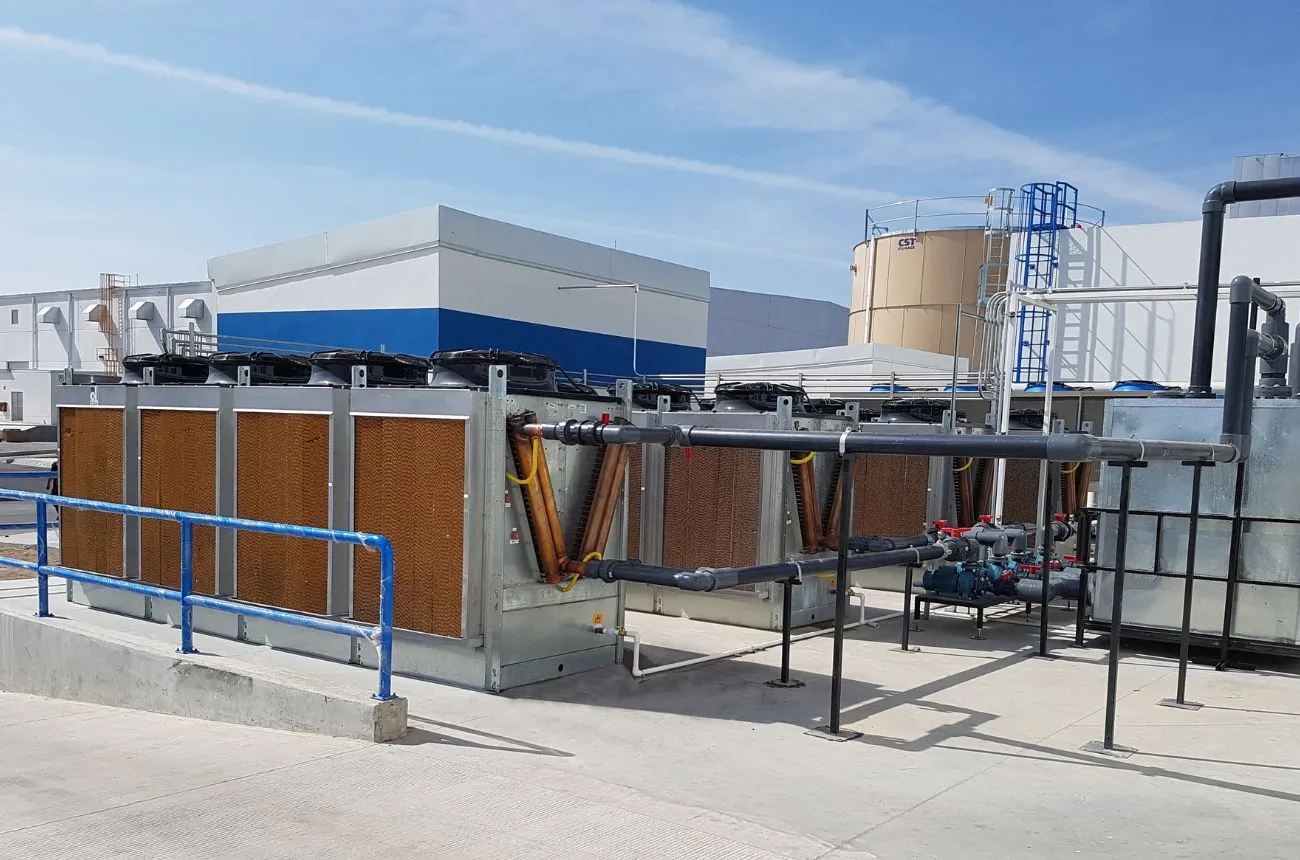
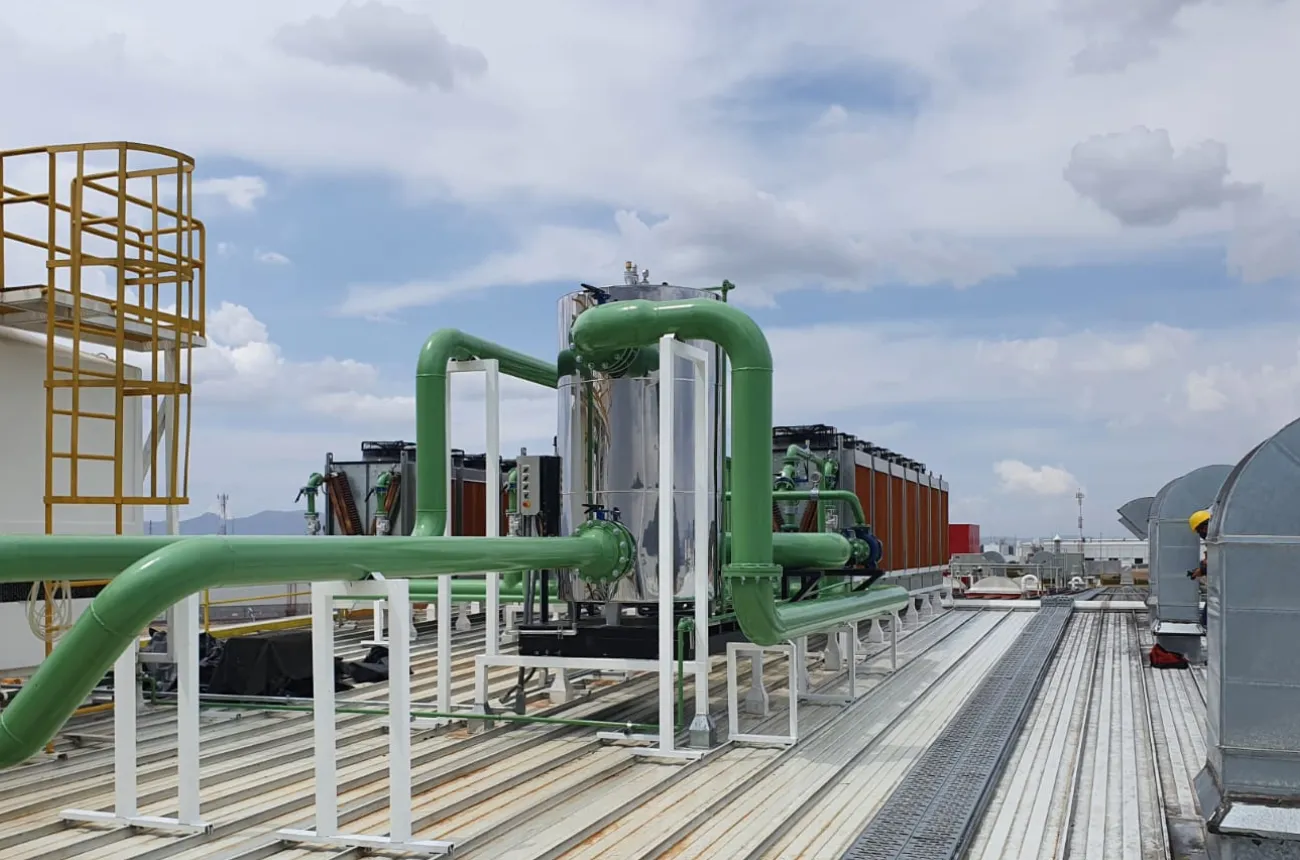
Dry air coolers are among the most efficient and sustainable technologies for industrial and commercial cooling.
They transfer heat from process fluids or equipment to the air without consuming water, making them an ideal replacement for traditional cooling towers.
Understanding how dry air coolers work helps explain why they are becoming essential in industries looking to cut costs, reduce environmental impact, and improve energy efficiency.
What Is a Dry Air Cooler?
A dry air cooler is a heat rejection device that removes heat from a liquid (usually water or glycol) by transferring it to the ambient air.
Unlike evaporative systems, it doesn’t rely on water evaporation to achieve cooling. Instead, it uses airflow and heat exchange through finned coils.
These systems are part of closed-loop cooling configurations, which means the same process fluid circulates continuously without exposure to contaminants or evaporation losses.
Dry air coolers are commonly used in industrial manufacturing, data centers, HVAC systems, and process cooling applications.
How Dry Air Coolers Work
The operation of a dry air cooler can be summarized in four key stages:
1. Heat Collection
The process fluid absorbs heat from industrial equipment or systems such as chillers, compressors, or hydraulic circuits. This fluid then flows toward the dry cooler.
2. Heat Transfer
Inside the cooler, the fluid passes through a series of finned copper or aluminum coils.
As it flows, fans move large volumes of ambient air across the coils. This airflow absorbs heat from the process fluid through conduction and convection.
3. Heat Rejection
The heated air is expelled into the atmosphere, while the process fluid cools down before returning to the system loop.
Because no water evaporates during this process, dry coolers achieve cooling solely through air-to-fluid heat exchange.
4. Temperature Regulation
Sensors and controls automatically adjust fan speed based on temperature or load demand. This ensures constant efficiency and minimizes power consumption, especially during cooler ambient conditions.
Main Components of a Dry Air Cooler
A dry air cooler typically includes:
- Heat exchanger coils: Transfer heat from process fluids to air.
- Fans: Move air across the coils for heat removal.
- Motors and drives: Control airflow and fan speed.
- Casing and fins: Improve surface area and overall efficiency.
- Sensors and controllers: Monitor temperature and regulate system performance.
This design makes dry coolers both modular and easy to maintain, ideal for large-scale operations.
Air-Cooled vs. Water-Cooled Systems
The main difference between dry air coolers and water-cooled systems lies in how they reject heat:
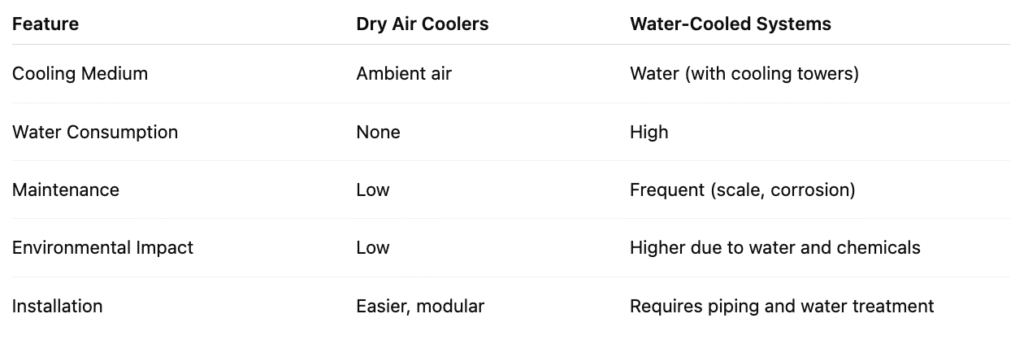
Dry air coolers are especially effective in temperate and dry climates, where ambient air can efficiently remove heat. In hotter environments, adiabatic pre-cooling can be added to increase performance.
Advantages of Dry Air Coolers
Modern dry cooling systems offer several benefits over traditional cooling methods:
- Zero water consumption – No evaporation or chemical treatment required.
- High energy efficiency – Variable-speed fans reduce power usage during low-load periods.
- Low maintenance – No scaling, corrosion, or biological growth.
- Environmentally friendly – Lower carbon footprint and no drift emissions.
- Flexible installation – Suitable for rooftops, outdoors, or mechanical rooms.
Their long operational life and minimal upkeep make them ideal for facilities that require continuous, stable, and clean cooling performance.
Applications of Dry Air Coolers
Dry air coolers are widely used across multiple sectors, including:
- Data centers – Maintaining stable temperatures for servers and IT equipment.
- Industrial manufacturing – Cooling compressors, hydraulic systems, and process loops.
- Food and beverage – Preserving product quality and ensuring sanitary conditions.
- Foundries and metal processing – Managing casting and sand cooling.
- HVAC systems – Supporting air conditioning and ventilation for large buildings.
In each of these industries, dry cooling helps reduce operating costs and environmental impact while improving system reliability.
Dry Air Coolers vs. Adiabatic Systems
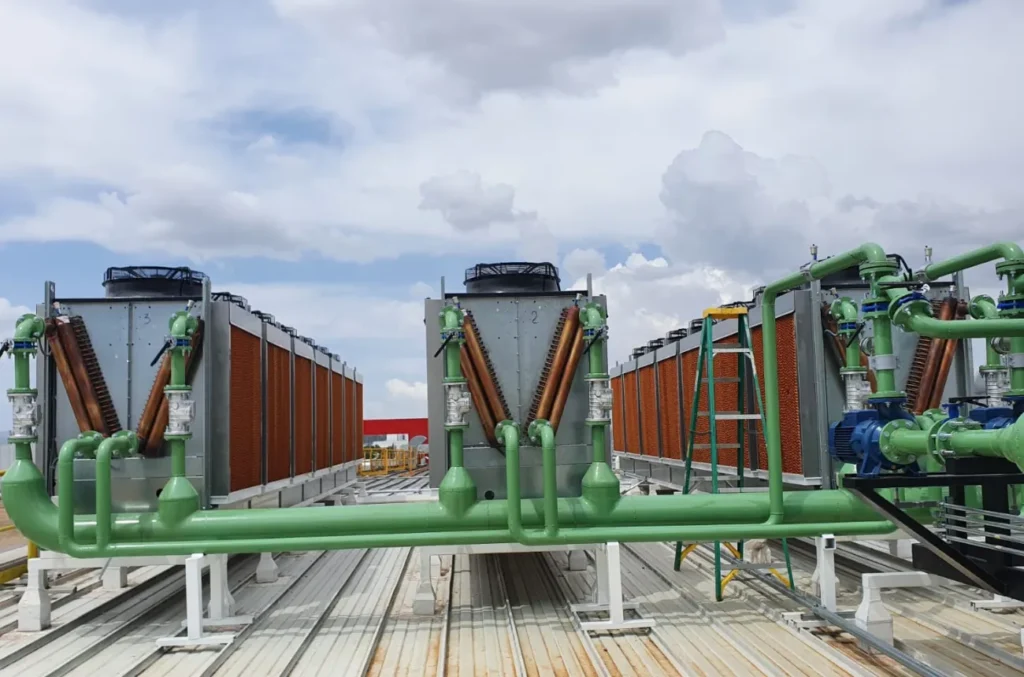
Although both systems aim to reject heat efficiently, adiabatic dry coolers go one step further.
They add a pre-cooling stage, spraying a fine mist of water over the air before it passes through the coils.
This temporarily lowers air temperature, improving heat transfer during hot weather, still using up to 90% less water than a cooling tower.
For industries operating in regions with fluctuating temperatures, combining both methods offers the best balance between performance and sustainability.
FAQs: How Do Dry Air Coolers Work
What are dry air coolers used for?
They are used to remove heat from process fluids in industrial, HVAC, and data center applications.
Do dry air coolers use water?
No. They rely entirely on air to transfer heat, which eliminates water use and reduces maintenance.
How efficient are dry air coolers?
They can save up to 90% in water and 50% in energy compared to cooling towers, depending on climate and load.
Can dry air coolers work in hot climates?
Yes. Adding adiabatic pre-cooling allows them to maintain performance even at high ambient temperatures.
Sustainable Cooling for Modern Industry
As companies aim to lower their carbon footprint and reduce water use, dry air coolers have become a key part of sustainable industrial design.
They provide reliable heat rejection with minimal resources, making them the preferred alternative to evaporative cooling systems.
At Andely Solutions, we specialize in energy-efficient HVAC-R systems such as dry air coolers, adiabatic units, and process chillers.
Our technology helps industries achieve long-term cost reductions, stable performance, and measurable sustainability goals.If you’re looking to transition to smart, sustainable cooling systems, contact our team to learn how we can help optimize your operation.