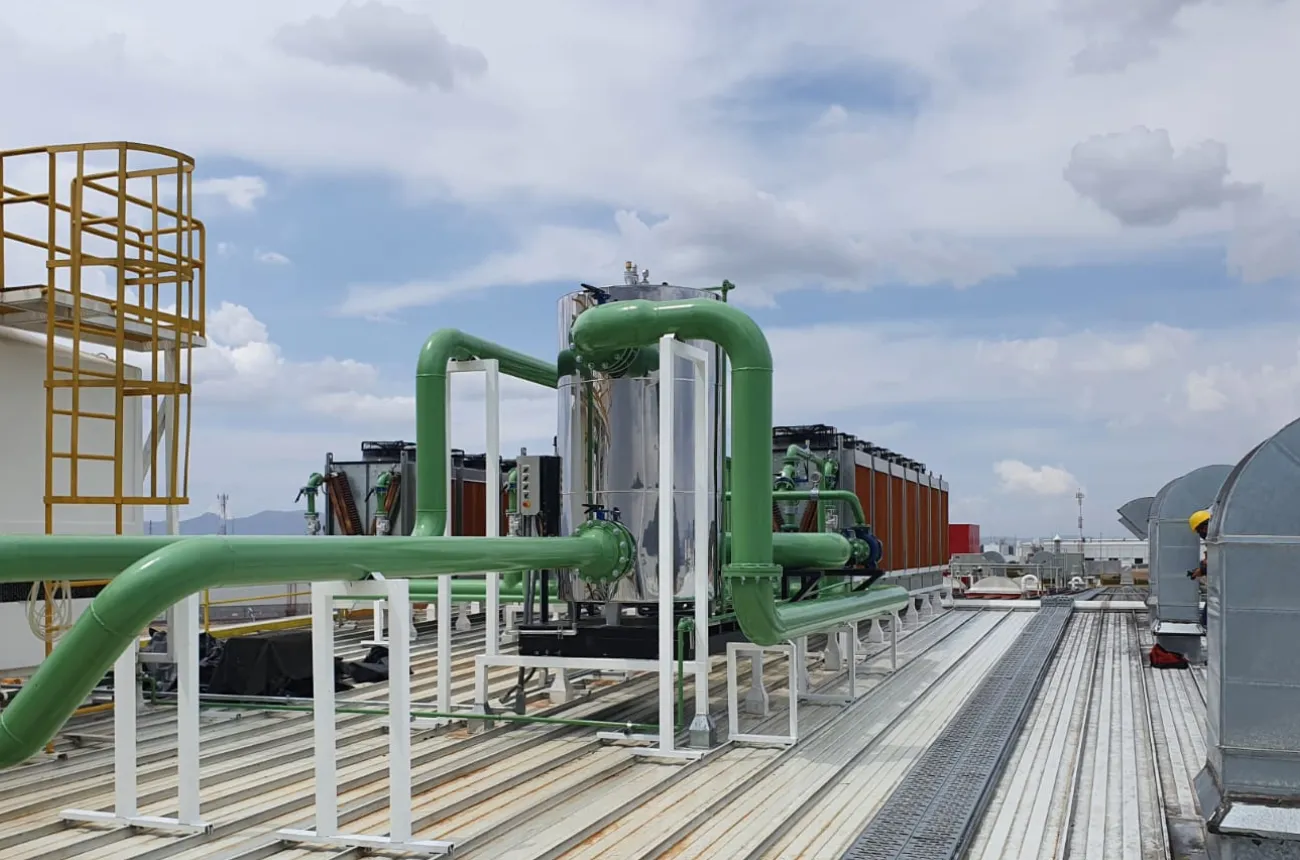
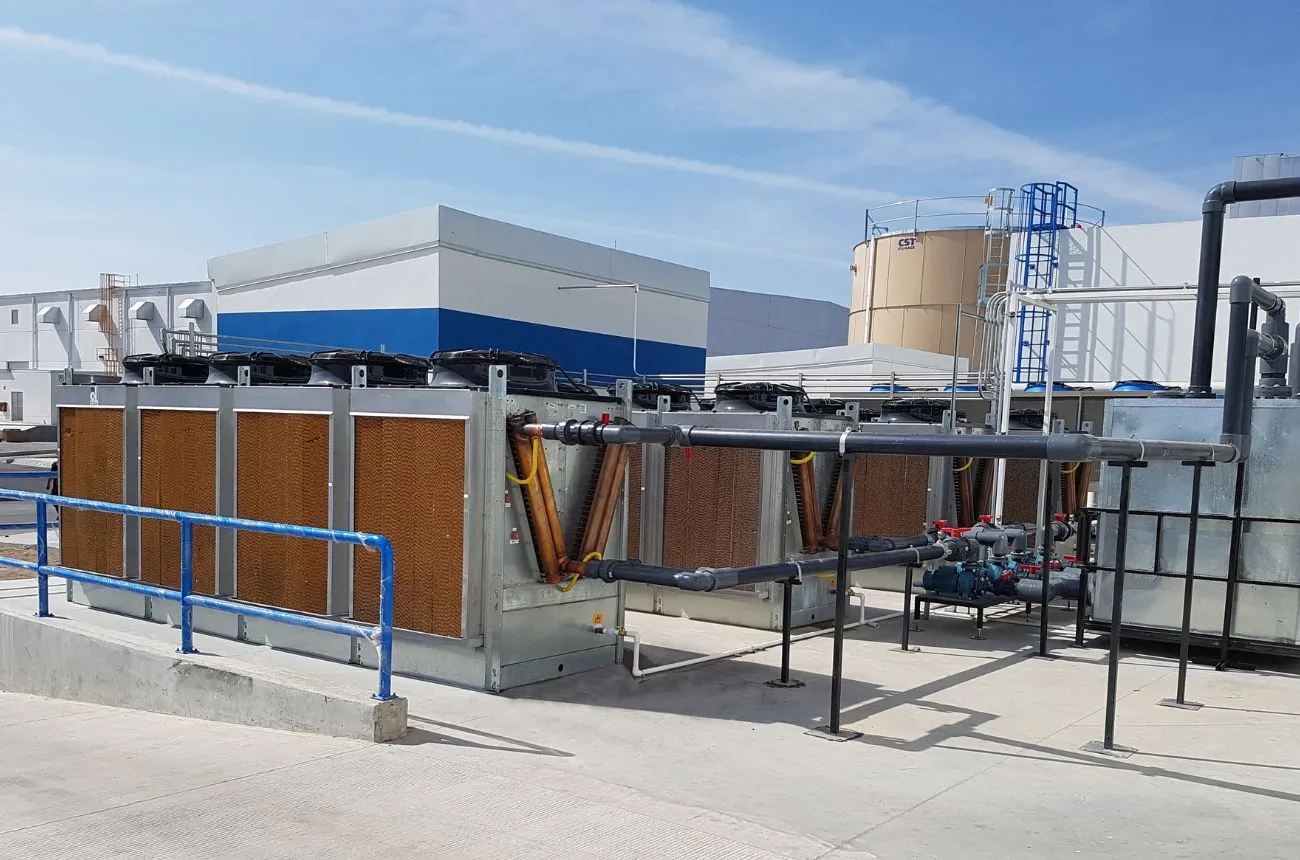
Industrial cooling systems play a critical role in maintaining temperature stability across modern manufacturing and processing industries. They prevent equipment damage, ensure consistent product quality, and keep production running efficiently under demanding conditions.
In sectors like plastics, food processing, foundries, or data centers, these systems are essential to control process temperatures and optimize overall energy performance.
Understanding Industrial Cooling Systems
At their core, industrial cooling systems are designed to remove heat generated during production processes. Machinery, chemical reactions, and environmental factors create excess heat that must be controlled to maintain safe and efficient operations.
If the heat is not managed correctly, it can cause production delays, reduce component lifespan, and increase energy costs. Cooling systems solve this problem by transferring heat away from the process and releasing it into the surrounding air or water through controlled methods.
How Industrial Cooling Systems Work
Although each system works differently depending on the application, the cooling process typically follows three main steps:
- Heat absorption – The system captures heat from equipment or processes using water, refrigerants, or air.
- Heat transfer – The heat moves through pipes or exchangers within a closed-loop system, which minimizes water loss and contamination.
- Heat rejection – Finally, the system releases heat into the environment using dry air coolers, chillers, or cooling towers.
Some modern setups use automation and sensors to monitor temperature in real time, optimizing efficiency and reducing unnecessary energy use.
Types of Industrial Cooling Systems
Dry coolers use ambient air to cool process water or refrigerant without evaporating water. They are ideal for facilities seeking sustainable, low-maintenance solutions.
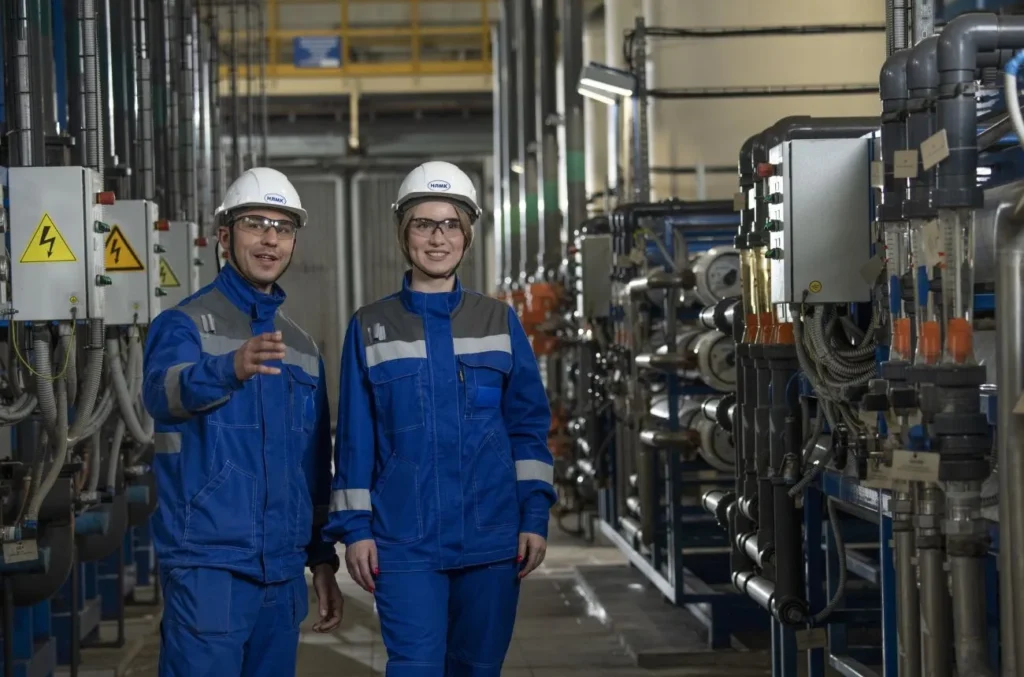
Industrial facilities use different cooling methods based on their processes, environmental conditions, and sustainability goals. Below are the most common system types used today.
1. Dry Coolers
- Zero water consumption
- Suitable for closed-loop systems
- High energy efficiency
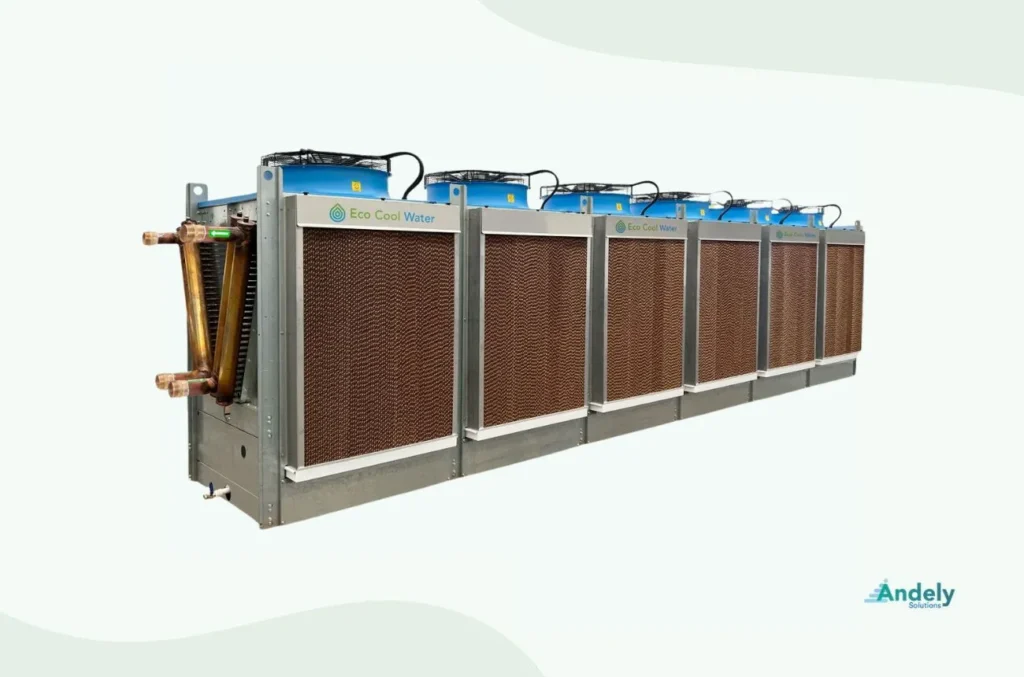
2. Adiabatic Dry Coolers
These systems combine dry cooling with adiabatic pre-cooling, spraying a fine mist of water when ambient temperatures rise. This increases performance while minimizing water use.
- Up to 90% water and energy savings
- Reliable under variable loads
- Excellent alternative to cooling towers
3. Industrial Chillers
Chillers absorb heat from process fluids and release it through air or water-cooled condensers. They provide precise temperature control in industries like plastics, automotive, and food manufacturing.
- Accurate, consistent cooling
- Air-cooled and water-cooled configurations
- Integrates with HVAC and process equipment
4. Evaporative Cooling Systems
These systems lower air temperature through the natural process of water evaporation. They are effective for large facilities or arid regions.
- Uses the principle where water evaporates to absorb heat
- Low energy consumption
- Improves air quality and comfort
5. Air Handling Units (AHUs / UMAs)
Air handling units regulate air circulation, filtration, and humidity. When connected to chillers or evaporative coolers, they maintain a clean, balanced environment in industrial facilities.
- Stable air temperature and humidity
- Improved ventilation and filtration
- Compatible with all major cooling systems
Applications of Industrial Cooling Systems
Industrial cooling systems are used across multiple sectors, including:
- Plastic injection molding: Cooling molds and hydraulic circuits for faster cycles.
- Food and beverage: Ensuring hygienic temperature control in production and storage.
- Foundries: Cooling castings, sand, and air in melting areas.
- Data centers: Preventing equipment overheating and downtime.
- Pharmaceuticals: Maintaining controlled environmental conditions for sensitive materials.
In all these applications, temperature consistency equals quality, reliability, and efficiency.
Benefits of Modern Cooling Systems
Upgrading to newer, high-efficiency cooling equipment offers significant long-term advantages:
- Reduced energy consumption and operating costs
- Lower maintenance due to closed-loop systems
- Improved worker safety and comfort
- Smaller environmental footprint through reduced water use
- Extended lifespan of machinery and production equipment
The transition from traditional cooling towers to dry coolers and adiabatic systems represents one of the most effective ways to enhance industrial sustainability.
FAQs: Industrial Cooling Systems
What are industrial cooling systems?
They are systems that remove excess heat from manufacturing or processing operations to maintain safe, stable, and efficient production.
What types of cooling systems are used in industry?
The most common are chillers, dry coolers, adiabatic systems, evaporative coolers, and air handling units.
What is a closed-loop cooling system?
A system where process water circulates in a sealed circuit, preventing contamination, minimizing evaporation, and improving efficiency.
Why are energy-efficient cooling systems important?
They lower operating costs, reduce CO₂ emissions, and help companies meet sustainability and environmental compliance goals.
Sustainable Cooling for the Future
As industries aim to reduce their environmental impact, sustainable cooling technologies have become a key investment.
Replacing cooling towers with adiabatic dry coolers or closed-loop chillers can cut water and energy use by up to 90%, while improving temperature control and reliability.
At Andely Solutions, we specialize in designing and integrating sustainable HVAC-R systems for industrial applications.
From process chillers and dry coolers to evaporative cooling and air handling units, our technology helps companies achieve efficiency, reliability, and measurable environmental savings.If you’re looking to modernize your facility with energy-efficient cooling systems, contact our team to discover how Andely can help you reduce costs and protect valuable resources.